
Blog
What a Replacement Garage Door Needs to Handle in Crystal Lake
Crystal Lake homes were mostly built between 1952 and 2009, in a cold climate zone. Here's what that means for choosing a replacement garage door this year.
What to Check
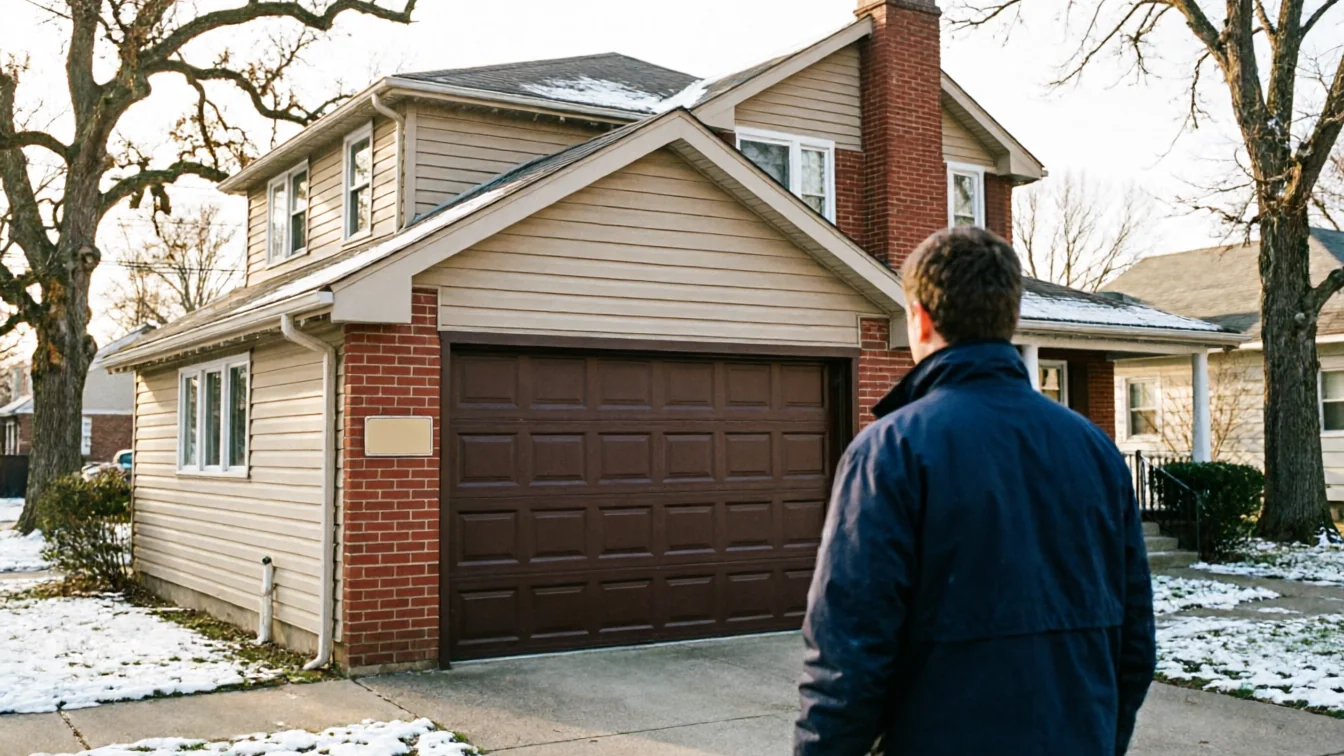
Before you order a door, look at what you're actually replacing. Housing in this area went up between 1952 and 2009, with the median build year landing around 1986, so a lot of the doors coming off these garages are original one-piece or early sectional units on hardware that hasn't been touched since installation. Check the track style first - side-mounted torsion springs were common in that era and they're not what most new doors ship with, so swapping in a modern sectional door often means swapping the track and spring assembly too, not just the panel. Look at the jamb and header for rot or settling; houses from the 1950s and 60s in this stretch have had seventy-plus years to shift. Measure twice before ordering anything - rough openings from that period aren't always standard width, and a door built to today's spec can be off by an inch or two on an older frame. If the opener is original to a house built before the 1980s, assume it's not compatible with a new door's safety sensors and budget for that separately.
How Local Conditions Play In
Crystal Lake sits in a cold climate band, and that changes what counts as a reasonable door, not just a preference. Steel panels contract in deep cold, and a door with thin single-layer skin will flex and rattle at the bottom seal long before it fails outright - that's usually the first sign an older door from the 1986-era housing stock needs more than a new weatherstrip. Insulation matters more here than in a mild-winter market; a door rated for an unheated garage in a warm climate won't hold up the same way against a Crystal Lake winter. The surrounding towns - Lake in the Hills four miles out, Cary and Algonquin at five, Woodstock and Huntley at seven - share a lot of the same subdivisions and build decades, so if you've seen a neighbor's door fail in a particular way, it's worth asking whether yours is the same age and hardware. Across the wider service area, median household income runs $110,450, which is enough room for most owners to upgrade to an insulated steel or composite door rather than replace with the cheapest option on the lot.
Season by Season
Cold tightens everything up. In deep winter, torsion springs stiffen and lubricant thickens, so a door that felt fine in October can start dragging or reversing on the opener by January - that's often a maintenance issue, not a sign you need a new door, but it's worth ruling out before you spend money. Late winter and early spring bring freeze-thaw cycling, which is hard on concrete slabs and the bottom seal; cracked or heaved slab edges near the threshold are common on houses from the older end of the 1952-2009 build range and will chew through a new weatherstrip fast if you don't address the slab first. Summer is the easier season mechanically, but humidity swings can warp wood-composite panels on older doors, which shows up as a door that binds on one side only. Fall is when you want to actually order a replacement if you're going to - getting it installed before the cold sets in means you're not waiting on a crew in January weather, and it gives the new door a full season to settle before it has to handle a Crystal Lake winter.
The Problem
Here's the part worth saying plainly: not every old door is worth saving, and not every door failure means you need a full replacement. If you've got original hardware from a house built in the 1950s or 60s, parts for that specific torsion setup are often no longer stocked, and tracking down a match can take longer than just replacing the assembly - that's a real limitation, not a sales pitch. On the other side, a door that's cosmetically rough but structurally sound, with hardware from the more common 1980s-90s stock that makes up most of this area's housing, is usually a repair job, not a replacement. The mistake we see most is owners assuming age alone means replace - a door from 1986 with well-maintained torsion springs can outlast a cheap new one installed badly. The honest answer depends on what's actually wrong, which is something you can only tell by looking at the specific door, not by guessing from the build year alone.
Questions
Common questions
How do I know if my garage door is original to the house?
If your house was built in the 1952-1986 range, check for a side-mounted torsion spring and a single-layer steel or wood panel - that combination usually means original equipment. Houses built later, into the 1990s and 2000s, more often have center-mounted torsion springs and factory insulation, which is a different repair and replacement picture entirely.
Does the cold climate here actually change what door I should buy?
Yes. A door rated for a mild climate won't hold up the same way through a Crystal Lake winter - thin steel skins flex and the bottom seal fails faster under repeated deep-cold cycling. An insulated steel or composite door handles the temperature swings better and keeps the garage warmer, which matters if it's attached to the house.
Is it worth replacing an old torsion spring system instead of buying a whole new door?
Sometimes. If the opening and frame are sound and the only issue is the spring or hardware, replacing just that is usually cheaper than a full door swap. The calculation changes if the hardware itself is an old, hard-to-source style common on houses from the 1950s and 60s - then a full replacement can actually cost less than chasing parts.
Recommendation
You Might Also Like
More garage door guides for Crystal Lake homeowners.
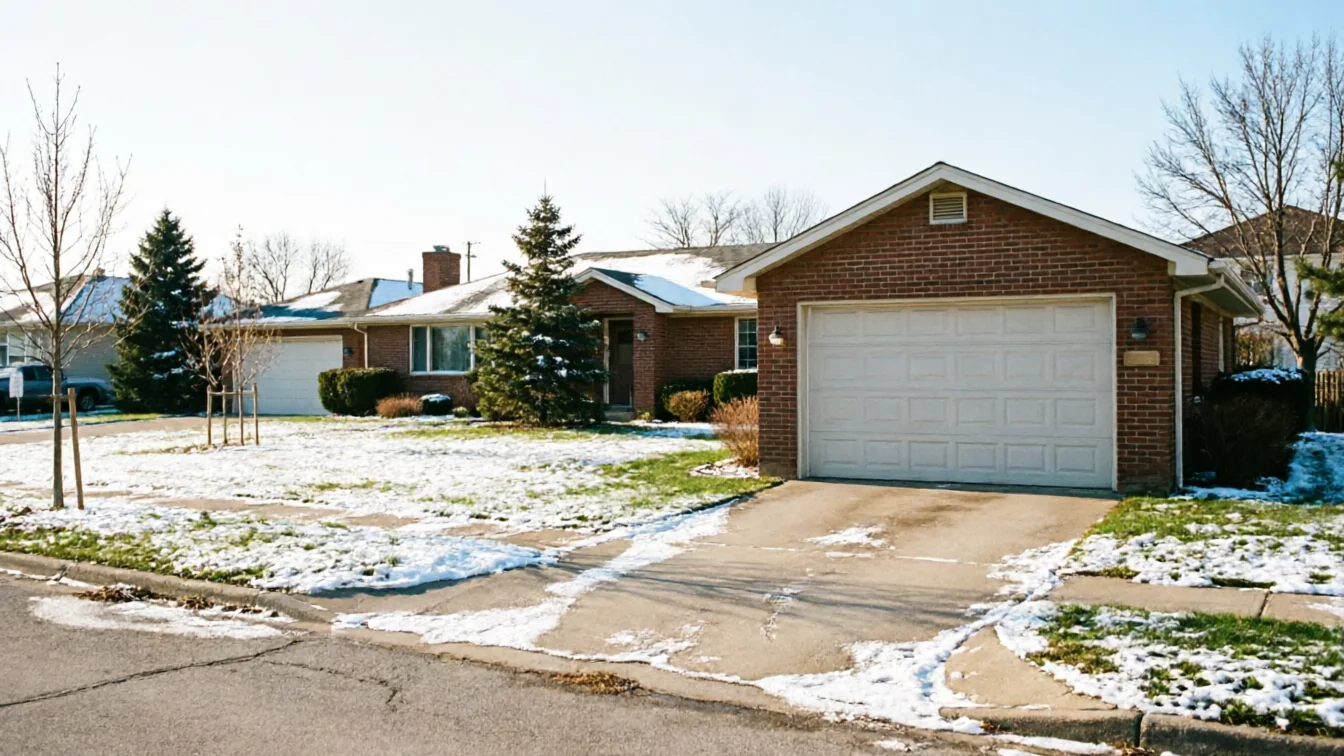
Attached or Detached: Why It Changes What Breaks on Your Garage Door
Crystal Lake homes built 1952-2009 split between attached and detached garages, and the difference changes what fails first in a cold-climate door.
Read guide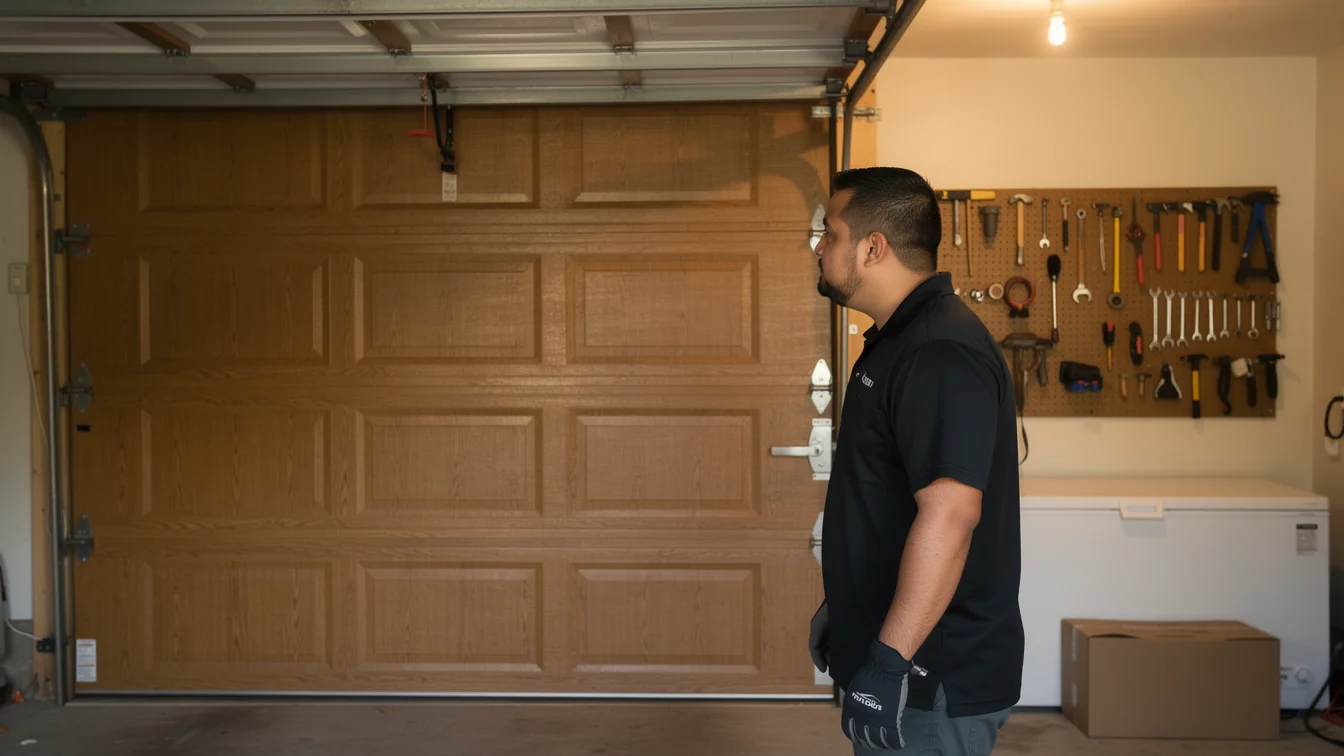
What That Noise From Your Garage Door Is Actually Telling You
Crystal Lake homes built mostly in the 1980s and 90s face real door wear from cold winters and wide seasonal swings.
Read guide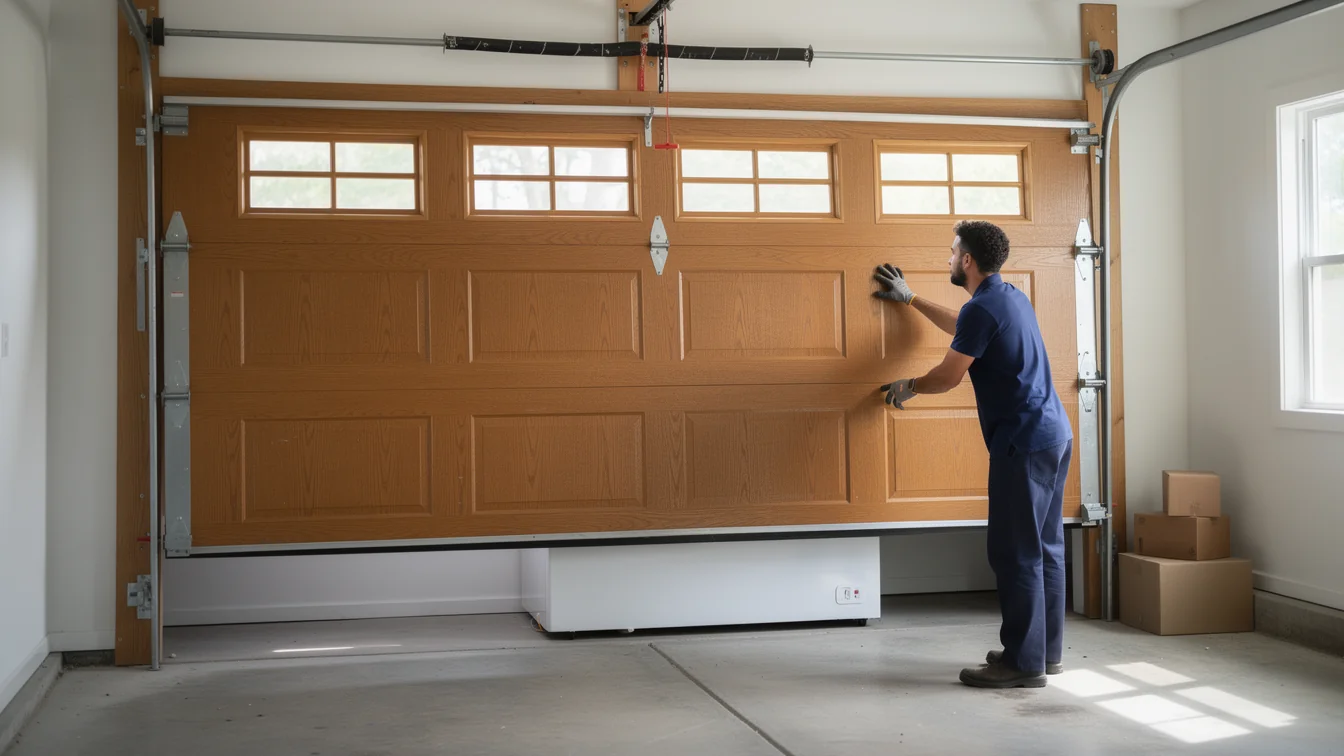
The Order We Check a Door In Around Crystal Lake
Crystal Lake houses built between 1952 and 2009, median year 1986, carry original hardware that a cold-climate winter finds fast.
Read guideReady when you are
Need a garage door sorted in Crystal Lake?
Crystal Lake Garage Door Pros repairs and installs garage doors, springs and openers in Crystal Lake, IL and the surrounding area.