
Blog
Crystal Lake Garage Doors That Jump the Track: What's Really Going On
Crystal Lake's 1980s-90s housing stock and cold winter swings both play a role when a garage door jumps its track. Here's what to check and why it happens here.
What to Check
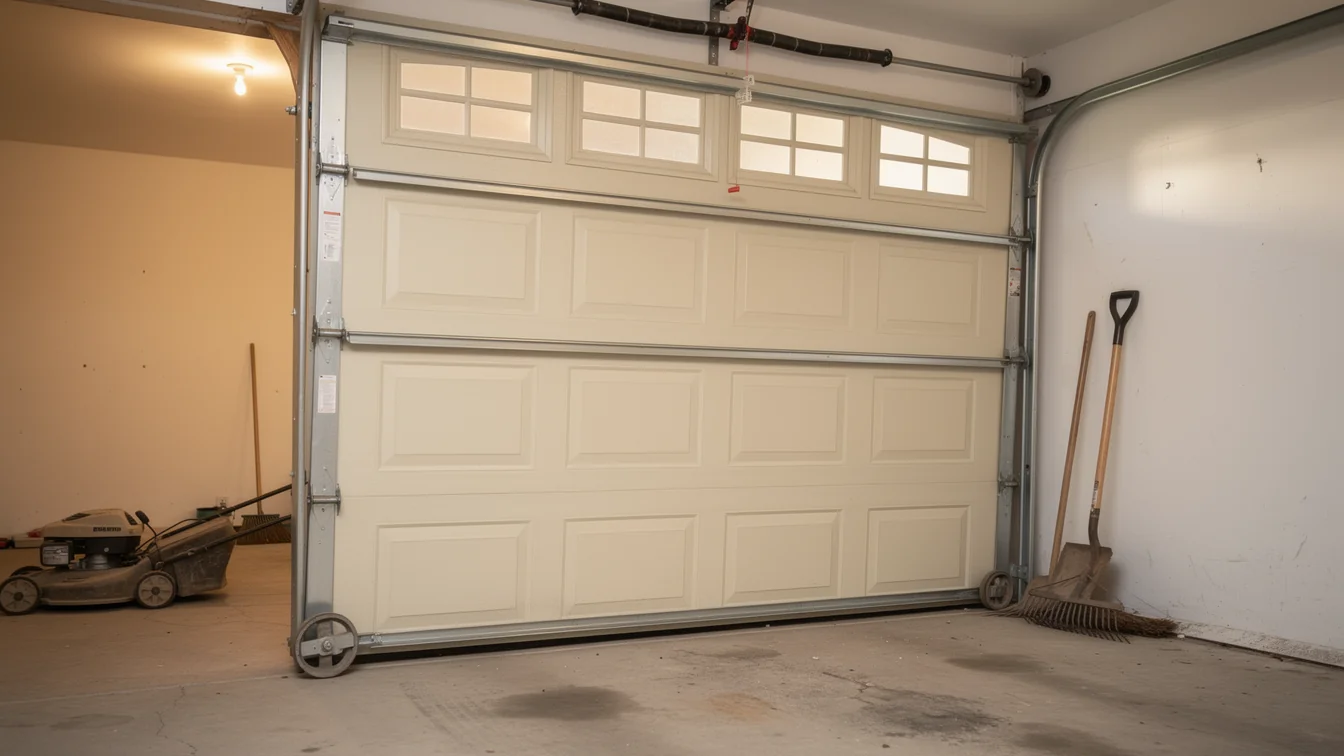
Start at the rollers. If a door has jumped the track, look first for a roller that's split or has worked its way out of the bracket - that's the most common starting point. Next, run your hand along the track itself looking for a bent section, usually near the bottom where a car bumper or a snow shovel clips it. Check that both vertical tracks are plumb and the same distance apart top to bottom; a track that's splayed even a quarter inch will throw rollers out on every cycle.
A lot of the housing in this area went up between 1952 and 2009, with the typical home dating to 1986, so plenty of garages still carry the original galvanized track from that era. That track is narrower than what gets installed today, and the mounting brackets were often lag-bolted straight into jamb wood that's now shrunk with age. Give those brackets a tug - if they move, that's your answer before you even look at the spring.
Last, check the bottom bracket and cable. A frayed cable that jumps its drum will yank one side of the door down hard enough to pop it off the track on that side. Don't force the door up or down once it's off - that's how a track gets bent worse or a cable snaps.
How Local Conditions Play In
Crystal Lake sits in a cold, moderate climate band, and that matters more for track problems than most people expect. It's not the deep cold itself - it's the freeze-thaw cycling. A night in the teens followed by a sunny 40-degree afternoon makes the track brackets and the wood jamb behind them expand and contract at different rates. Over a few winters, the lag screws back out slightly, the bracket gets a little play in it, and one day a roller finds that gap and rides out of the channel.
Slab movement adds to it. Garage floors here see some frost heave at the apron, which is enough to tilt the bottom few inches of track out of plumb over time, even when nobody's hit it with anything. That slow lean is easy to miss because the door still closes fine for years - until a cold snap tightens everything up and a roller catches the misaligned edge.
This is also why a track issue that shows up in December often traces back to a loose bracket nobody noticed in October. The conditions here don't cause the wear so much as they find it.
Season by Season
Fall is the time to catch this before it becomes a January problem. Before the first hard freeze, check bracket bolts and track alignment while the wood jamb is still at its summer dimension - that's when a loose lag is easiest to retighten properly.
Winter is when things actually fail. Cold snaps tighten metal and wood at different rates, and that's when a marginal bracket or a track with a slight bow finally lets a roller slip. If a door comes off the track in the cold, don't try to walk it back on by hand - cold steel is more brittle and more likely to bend further.
Spring thaw brings a second wave, this time from ground movement rather than metal contraction. As frost comes out of the ground unevenly, a garage slab can shift just enough to throw the bottom track section out of plumb. Doors that were fine all winter sometimes start binding in March for exactly this reason.
Summer is the quiet season for track problems here - humidity affects wood doors more than it affects track alignment. It's the best time to do the bracket check you skipped in the fall.
The Problem
Here's the part worth being straight about: a bent track is often not worth repairing on its own. Steel track that's kinked more than a little doesn't bend back true - it bends back close, and a roller riding a near-true track will jump again within a season. Once a section shows a visible kink, replacing that section, or the whole track if the door's original, is the honest answer, not a patch.
This matters more in a service area like this one, where a lot of the roughly 125,448 owner-occupied houses were built during the 1980s and 90s boom years. Original track and hardware from that window is now old enough that bracket wear and a bent rail are showing up around the same time, on the same door. Fixing one without looking hard at the other is a callback waiting to happen.
We don't try to straighten a track that's kinked at a bend point - it's a section swap or it's not a fix. If you're in one of the nearby communities, Lake in the Hills, Prairie Grove, or Cary among them, four to five miles out, the same housing age and the same cold-climate bracket wear apply. Most owners here choose to replace the worn section once it's jumped twice rather than keep nudging it back.
Questions
Common questions
Why did my garage door suddenly jump the track after years of working fine?
Usually it's not sudden - a bracket has been loosening gradually, often from freeze-thaw cycling against the jamb wood, until a cold snap finally lets a roller slip out. If your home was built during the 1980s or 90s boom common in this area, the original hardware may just be at the end of its working life.
Can I push a garage door back onto its track myself?
We'd rather you didn't try, especially in cold weather when the steel is more brittle. Forcing it can bend the track further or snap a cable under tension. Leave the door where it sits and call - getting it back on safely takes the right clamps, not muscle.
Is a bent track always a full replacement?
No - if the kink is minor and caught early, we can sometimes swap just the damaged section. Once the bend is sharp or the bracket mounts are worn, straightening it back to true isn't realistic, and replacing the section is the more honest fix.
Does winter cause more track problems here than other seasons?
Winter is when most failures actually happen, because cold tightens metal and wood at different rates and finds whatever bracket was already loose. But the wear itself often starts in fall or during spring frost heave - winter just tends to be when it shows up.
Recommendation
You Might Also Like
More garage door guides for Crystal Lake homeowners.
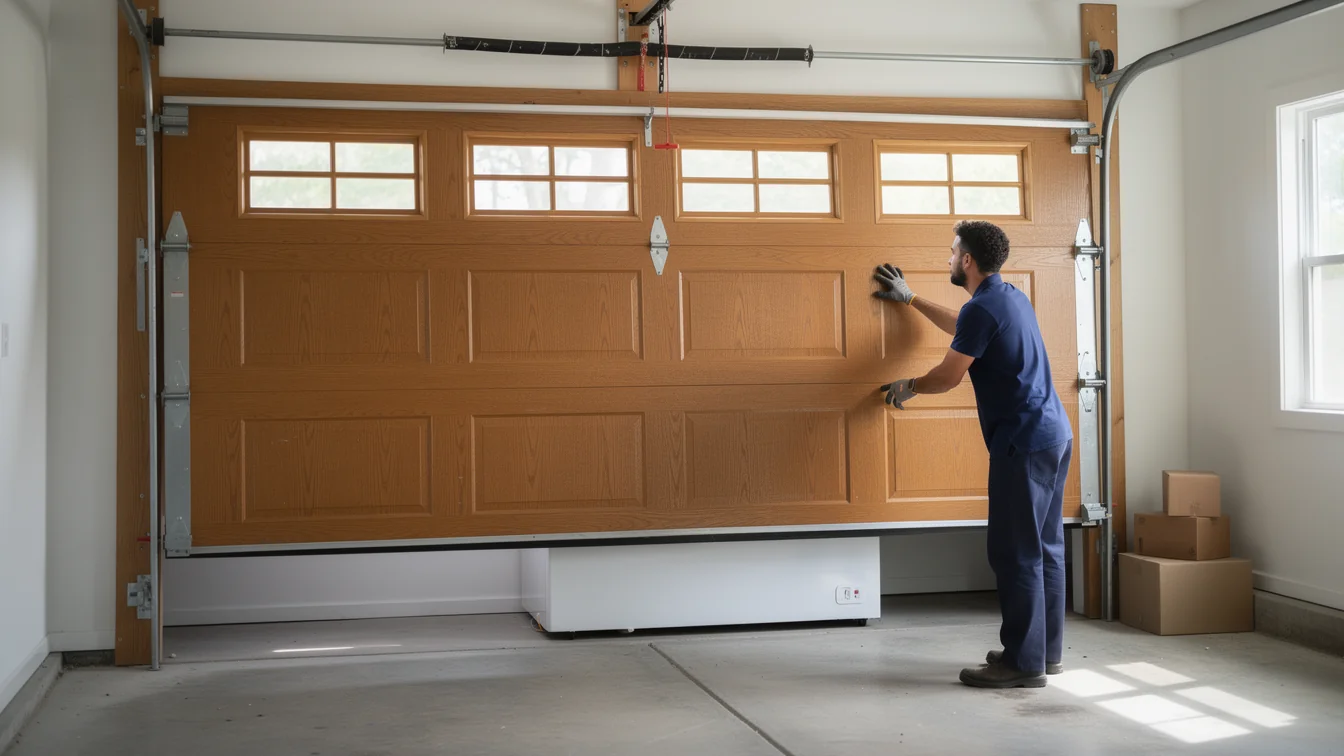
The Order We Check a Door In Around Crystal Lake
Crystal Lake houses built between 1952 and 2009, median year 1986, carry original hardware that a cold-climate winter finds fast.
Read guide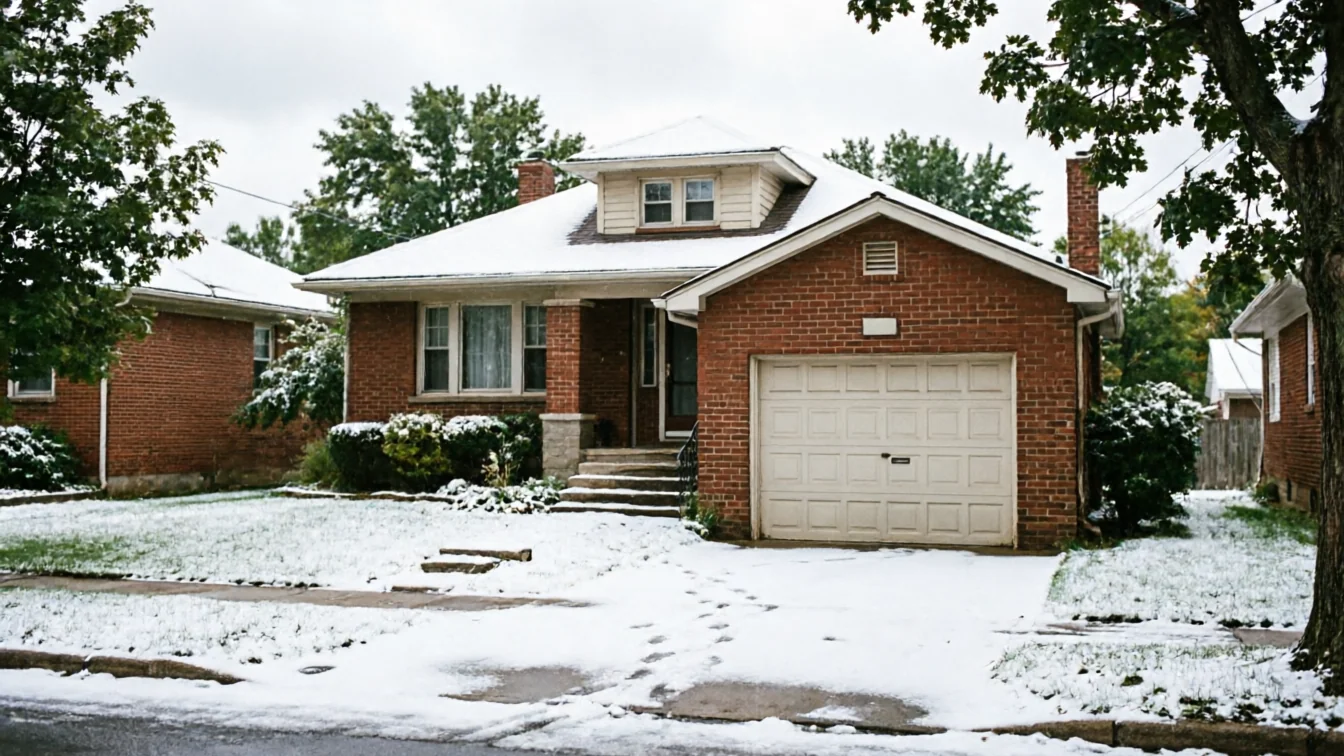
Cold-Weather Spring Failures in Crystal Lake Garages
Crystal Lake homes built mostly in the 1980s and 90s face cold-weather spring failures.
Read guide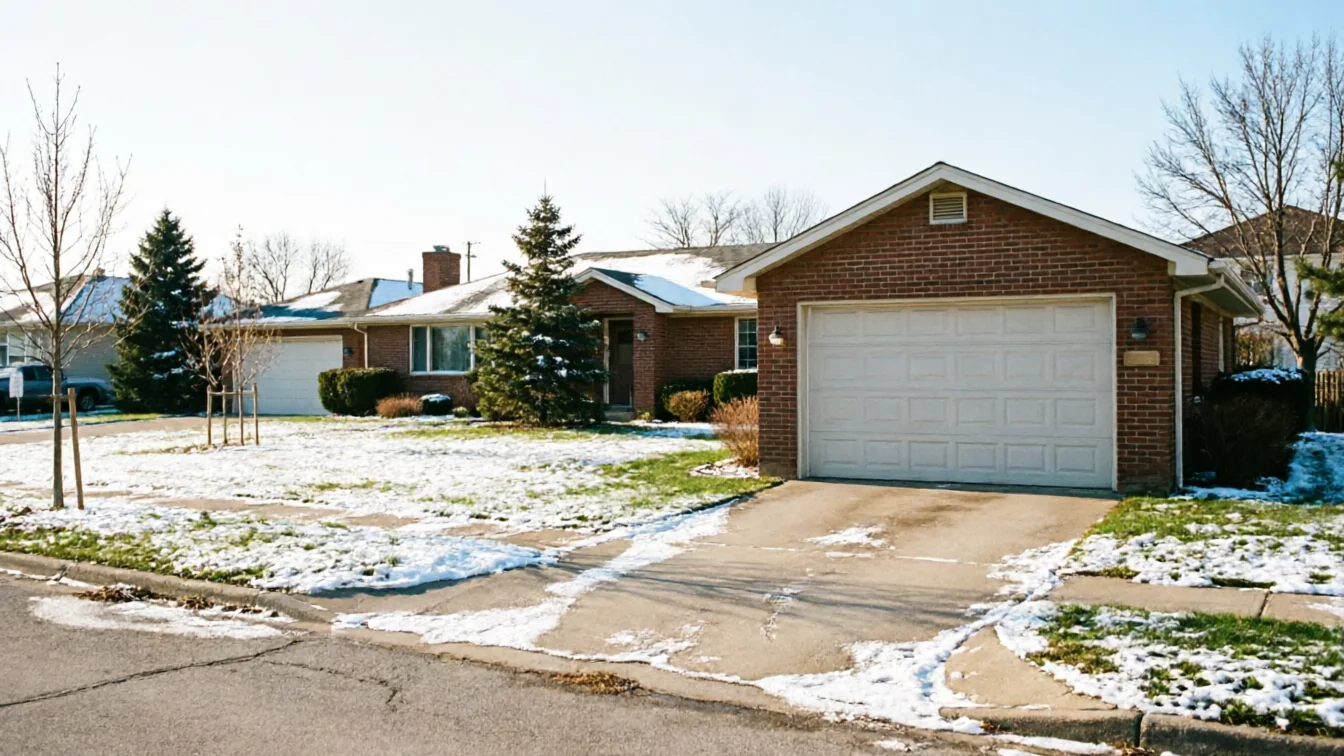
Attached or Detached: Why It Changes What Breaks on Your Garage Door
Crystal Lake homes built 1952-2009 split between attached and detached garages, and the difference changes what fails first in a cold-climate door.
Read guideReady when you are
Need a garage door sorted in Crystal Lake?
Crystal Lake Garage Door Pros repairs and installs garage doors, springs and openers in Crystal Lake, IL and the surrounding area.