
Blog
Why So Many Doors Here Predate Insulation Standards
Most Crystal Lake area garage doors date to the 1952-2009 building boom, median 1986 - before foam-core insulation was standard. Here's what that means for your door.
What to Check
Walk out and press your palm flat against the inside of your garage door on a cold morning. If it's cold to the touch within seconds, you've got a single-layer steel or wood door with no foam core behind it - and that's the norm here, not the exception. Housing in this service area went up mostly between 1952 and 2009, with the median build year landing at 1986. That's squarely in the era when garage doors were framed as a driveway feature, not part of the house's thermal envelope.
Check the bottom seal next. On doors this old, the rubber astragal has usually hardened and cracked, leaving gaps you can see daylight through. Check the panels for a hollow sound when you knock - hollow means no insulation, period. Check the weatherstripping around the jambs, which on a 1980s install was often never upgraded even when the opener was replaced.
None of this means the door is broken. It means it was built to a standard that predates the idea that a garage door loses heat the same way a window does. A door that still opens and closes fine can still be bleeding energy every single day it's cold outside.
How Local Conditions Play In
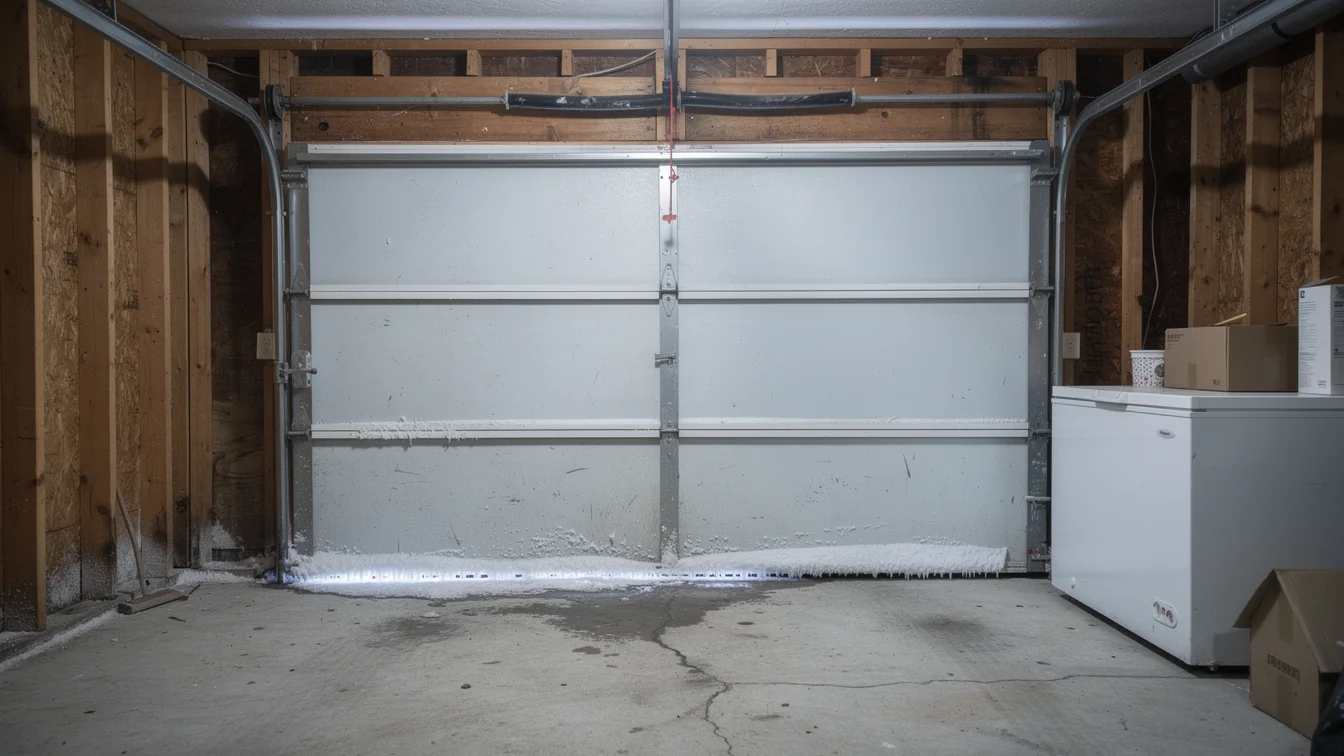
This area sits in a cold-moderate climate band, which means real winter cold, real summer heat, and wide swings between them across the year. A steel door with no insulation doesn't just lose heat in January - it expands and contracts with every swing, and that movement works on the same hardware year after year. Track bolts loosen. Hinges that were torqued once in 1986 shift a few degrees and never get checked again.
On an insulated door, the foam core also adds rigidity, which matters when wind loads push against a wide double door. On an uninsulated panel, that rigidity isn't there, so the door flexes more in gusts, and that flex is what eventually shows up as a bowed panel or a rattling section nobody can quite pin down.
It's not that the cold breaks doors outright. It's that a door designed before insulation was standard has less margin to absorb what a cold-moderate climate does to steel and hardware over three or four decades. The door that would shrug off that stress if it were built today has fewer parts helping it cope when it was built in the 1980s.
Season by Season
Winter is when an uninsulated door costs you the most and shows it the least - the heat loss is constant, but it's invisible until the utility bill or the cold spot inside the garage gets impossible to ignore. Steel contracts in deep cold, and on an older door that's often when a spring that was already fatigued finally lets go.
Spring brings the thaw cycle, and with it, moisture. An uninsulated door has no vapor barrier, so condensation forms on the inside face as outside temperatures swing warm and cold in the same week. That condensation is what you see dripping onto the floor or rusting a track from the inside.
Summer heat swells wood doors built in that same 1952-2009 window and can warp panels that were never quite flat to begin with. Fall is the calm stretch - the best time to deal with any of this before the cold sets back in, because once winter hits, a repair that could've waited becomes one that can't.
The pattern repeats every year on a door this age, and every year it's a little more worn than the year before.
The Problem
Here's the honest version: a garage door built before insulation rules reached garage construction was never going to meet today's energy standard, and no amount of weatherstripping fixes that completely. You can seal the gaps, replace the astragal, add a bottom seal - and you should - but a hollow steel panel with no foam core is still a hollow steel panel with no foam core. At some point you're polishing a door that's doing its basic job worse than a new one would.
We won't tell you every door from this era needs replacing. Plenty of them are structurally sound and just need the seals and hardware brought current. But if the panels are bowed, if the springs are original, and if you're already feeling the cold coming through - that's not a maintenance problem anymore, it's a replacement decision, and no amount of caulking changes the math on a door built to a standard nobody follows now.
The honest limitation: we can't retrofit insulation into an existing steel panel. Once it's stamped hollow, it stays hollow. The fix is a new door, not a patch.
Questions
Common questions
Is my garage door too old to insulate?
If it's an original hollow steel panel from the 1980s or earlier, you can't add foam core after the fact - insulation gets built into the panel at manufacture, not retrofitted into it. You can improve seals and weatherstripping, which helps, but the panel itself stays as it was made.
Why does my garage feel colder than the rest of the house?
Most houses in this area were built between 1952 and 2009, median 1986, when garage doors weren't treated as part of the building envelope. An uninsulated steel door loses heat constantly in a cold-moderate climate, so the garage never holds warmth the way insulated rooms do.
Should I replace or just reseal my old door?
If the panels are sound and just drafty, reseal first - new astragal and weatherstripping cost less and solve a real share of the problem. If panels are bowed, hardware is original, or the door is visibly flexing in wind, replacement is the more honest fix.
Do newer doors in this area come insulated standard?
Doors installed in the last couple decades of the 1952-2009 building window increasingly came with foam-core options, but plenty of mid-80s houses still have their original uninsulated door. Age alone, not just the build era of the house, tells you more than the house's overall vintage does.
Recommendation
You Might Also Like
More garage door guides for Crystal Lake homeowners.
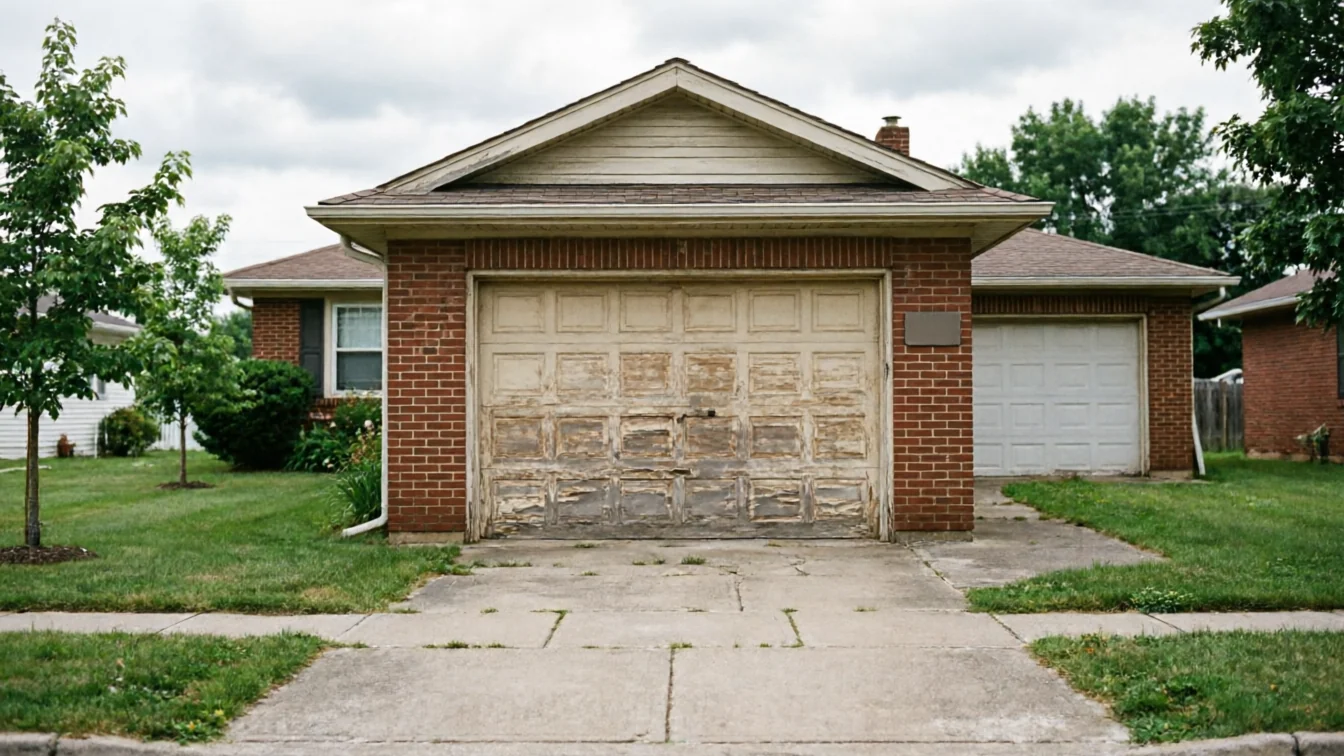
Is Your Crystal Lake Garage Door Worth Fixing or Replacing?
Crystal Lake homes mostly date 1952-2009, median 1986, with cold-moderate winters.
Read guide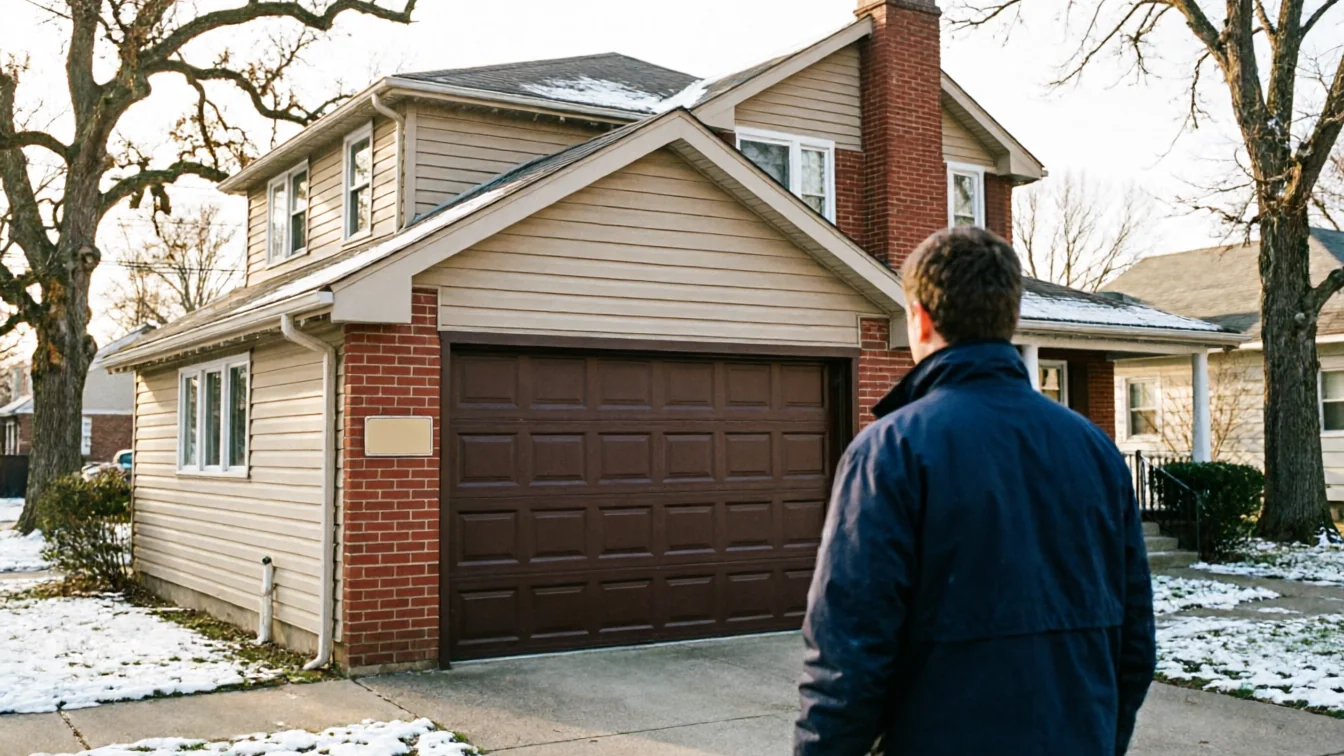
What a Replacement Garage Door Needs to Handle in Crystal Lake
Crystal Lake homes were mostly built between 1952 and 2009, in a cold climate zone.
Read guide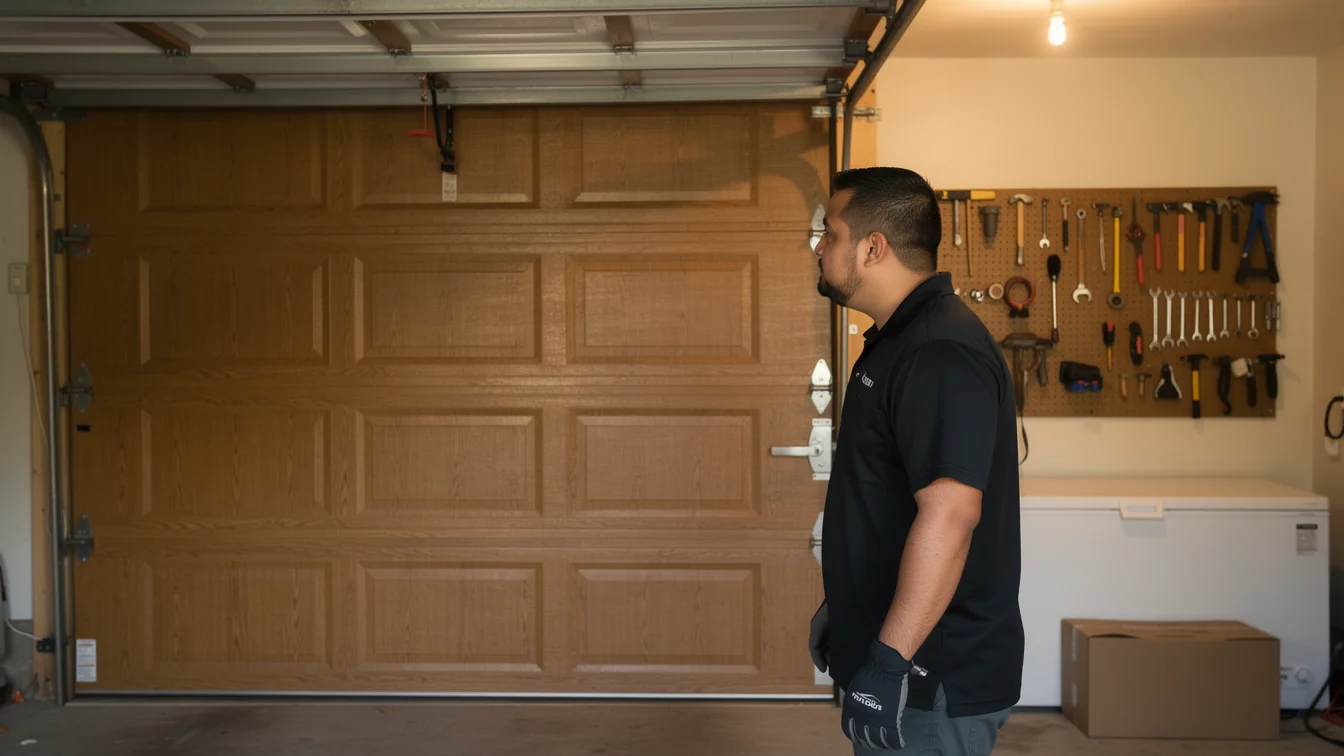
What That Noise From Your Garage Door Is Actually Telling You
Crystal Lake homes built mostly in the 1980s and 90s face real door wear from cold winters and wide seasonal swings.
Read guideReady when you are
Need a garage door sorted in Crystal Lake?
Crystal Lake Garage Door Pros repairs and installs garage doors, springs and openers in Crystal Lake, IL and the surrounding area.