
Blog
What Wind Does to a Wide Garage Door in Crystal Lake
Why wide double garage doors on Crystal Lake's 1980s-90s houses take the worst of wind, what to inspect before a storm, and when a panel is past saving.
What to Check
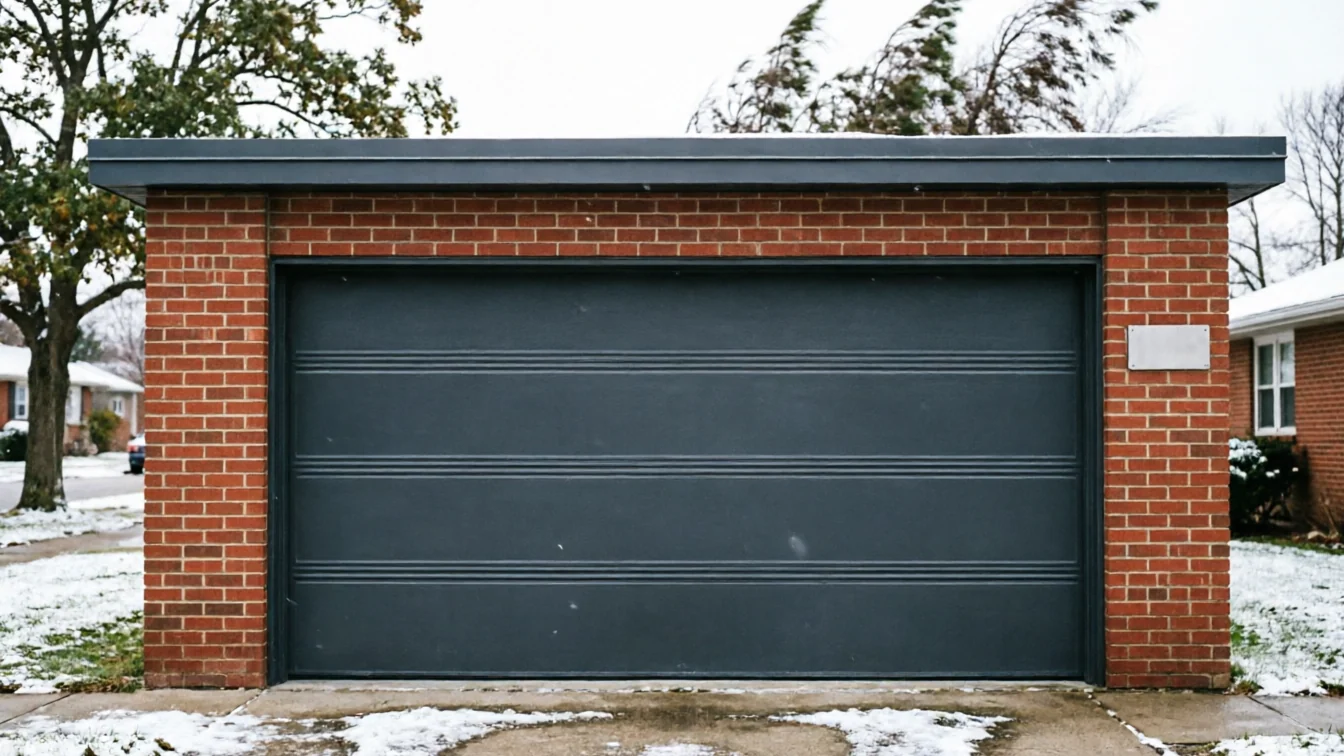
Start with the track brackets, not the panels. On a 16-foot double door, wind doesn't hit evenly - it pushes hardest at the center where the door has the least support, and that's where you'll see the track pull away from the jamb first. Run your hand along the vertical track on both sides and look for daylight between the bracket and the framing.
Next, check the struts on the back of the top two panels. These are the horizontal reinforcement bars that keep a wide door from bowing under pressure. If your house falls into the 1980s-90s construction window common across this area, the original strut is probably a single light-gauge piece sized for the building code of that decade, not for today's wind-load standards.
Last, check the end hinges where the door meets the track rollers. A door that's been flexing in wind for a few seasons will show elongated bolt holes before it shows anything else. That's the early sign most owners miss because the door still looks fine standing still.
One honest limit here: a visual check from the inside won't catch a track that's been bent and sprung back into shape. If the door has taken a hard gust recently, that one needs a hands-on look before you trust it again.
How Local Conditions Play In
Crystal Lake's housing stock runs 1952 through 2009, with the median build year at 1986, and most of what's standing across this side of McHenry County - out toward Lake in the Hills, Algonquin, Cary, and Huntley - is from that same 1980s-90s stretch. That matters for wind specifically because it's the era when builders switched from two single-bay doors to one wide double door on new construction. A single bay handles wind load fine because it's narrow and stiff by nature. A double bay is a bigger sail, and it's only as stiff as the struts and track brackets a builder chose to spec thirty-some years ago.
Crystal Lake sits in a cold moderate climate band, which means the wind problem isn't a once-a-year event. It's freeze-thaw cycling all winter plus open, wind-exposed stretches where houses sit on larger lots without much windbreak. A door that flexes slightly in a fall gust and flexes again in a January gust, now stiffened by cold, is working harder on the same hardware than a door in a milder climate ever would. The combination of original-era bracing and a long cold season is the actual local variable here - not just 'it gets windy.'
Season by Season
Fall is when you want the track bolts checked, before the first real wind event of the season finds a bracket that loosened slowly over summer heat cycles. It's a ten-minute job and it's the cheapest time to catch it.
Winter is the hard season for a wide door in this climate band. Cold makes steel brittle and nylon rollers stiff, so a gust that a door would absorb in October can crack a strut or pop a roller in January. If you hear a double door banging or rattling in its track during a windy stretch, that's the strut flexing more than it should - not normal.
Spring brings the freeze-thaw aftermath. Melt water gets into bolt holes and bracket seams that loosened over winter, then refreezes. This is when track brackets that survived winter wind finally let go, usually on a morning that isn't windy at all, which confuses owners.
Summer is the slow season for wind damage but the right time for the fix. If a strut or bracket showed stress over winter, replace it in summer rather than waiting - parts and scheduling are both easier, and you're not racing a storm.
The Problem
The core issue isn't that Crystal Lake gets unusually violent wind. It's that a large share of the double garage doors here were built to a 1980s-or-90s-era spec, on houses from that same median 1986 build year, with reinforcement sized for the standards of that time rather than for decades of repeated cold-season flexing. Across the 209,522 households and 125,448 owner-occupied houses in this service area, the wide double door is the default, not the exception, especially on the newer end of that 1952-2009 range.
At a median household income of $110,450, most owners here can afford to fix a damaged door properly rather than patch it, but the fix has to match what's actually on the house - original strut sizing, original bracket spacing - not a generic repair. Sometimes that means a strut kit. Sometimes, if the track has been bent and straightened more than once, replacement is the honest answer, because a track that's been reshaped doesn't hold geometry the same way twice. We won't tell you to replace a door that just needs a strut kit, and we won't tell you a bent track is fine when it isn't.
Questions
Common questions
Why does my double garage door shake more in wind than my neighbor's single-bay door?
A double door spans roughly twice the width, so wind load pushes on a much larger surface with the same center-point support. Houses built in the 1980s and 90s here often have doors sized to that era's wind-load standards, which weren't built around decades of repeated flexing. Shaking usually means the strut or track bracket is already working harder than it should.
Is it worth reinforcing an older double door instead of replacing it?
Often, yes. A strut kit and tightened track brackets can bring an older double door's wind resistance close to current standards for a fraction of replacement cost. The exception is a door with a track that's been bent and straightened more than once - that hardware doesn't hold its geometry reliably, and reinforcing it just delays a replacement you'll need anyway.
When in the year should I have my door checked for wind damage?
Fall, before the first real wind events, and again in spring after the freeze-thaw cycle has had a chance to work on any bolts or brackets that loosened over winter. A ten-minute check at either point is the cheapest time to catch a problem before it becomes a stuck or sagging door.
Recommendation
You Might Also Like
More garage door guides for Crystal Lake homeowners.
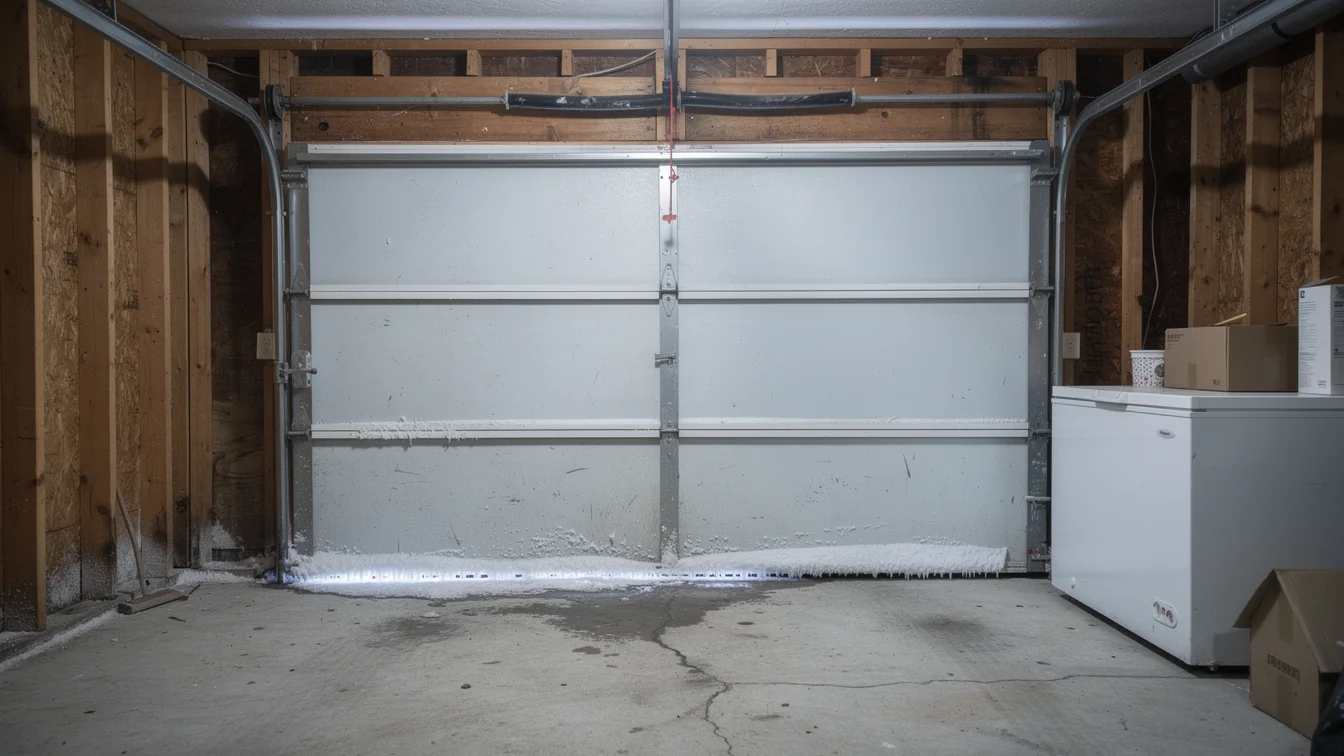
Why So Many Doors Here Predate Insulation Standards
Most Crystal Lake area garage doors date to the 1952-2009 building boom, median 1986 - before foam-core insulation was standard.
Read guide
What That Noise From Your Garage Door Is Actually Telling You
Crystal Lake homes built mostly in the 1980s and 90s face real door wear from cold winters and wide seasonal swings.
Read guide
When the Power Drops: Openers in Crystal Lake Homes
Crystal Lake openers fail differently than you'd think: 1980s-90s housing stock, cold winters, and power cuts combine to strand doors shut or wide open.
Read guideReady when you are
Need a garage door sorted in Crystal Lake?
Crystal Lake Garage Door Pros repairs and installs garage doors, springs and openers in Crystal Lake, IL and the surrounding area.